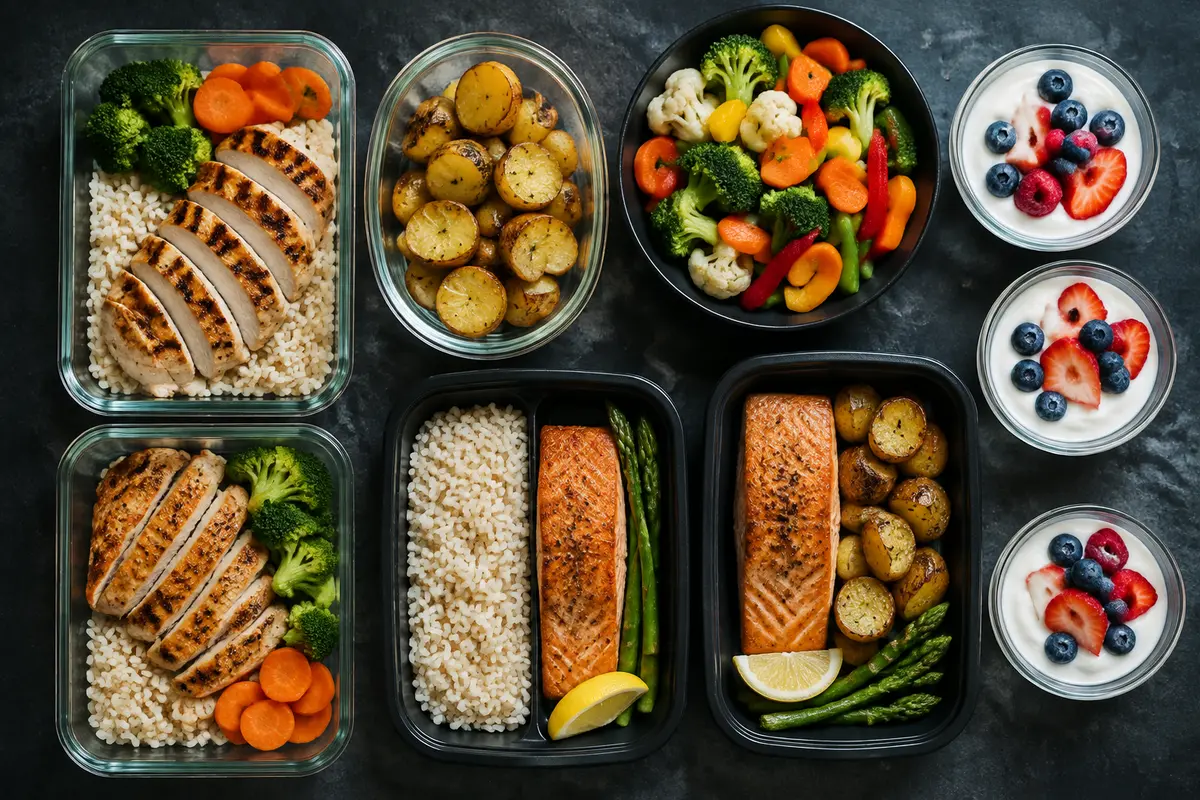
Start with your calorie target—not a universal menu
Weight-loss calorie needs vary with body size, activity, routine and desired pace. A fixed 1,200- or 1,500-calorie menu cannot be appropriate for everyone. Estimate a starting target, then use your multi-week weight trend, hunger, training and recovery to decide whether that estimate fits.
The meals below are a structure rather than a prescription. Portions should change to match the individual calorie and macro target. People who are pregnant, managing a medical condition or concerned about disordered eating should seek personalized guidance from a qualified healthcare professional.
- Estimate maintenance calories
- Choose a manageable deficit
- Set a practical protein target
- Adjust portions to the person
- Review the trend before changing the plan
Use four parts to build each main meal
Begin with a familiar protein source. Add fruit or vegetables for volume and variety, choose a carbohydrate portion that supports energy and training, then add fats intentionally for flavor and satisfaction.
This structure works because ingredients can change without changing the job of the meal. Chicken can become turkey, rice can become potatoes and yogurt can become cottage cheese when the portions are adjusted for similar calories and protein.
- Protein: chicken, turkey, fish, lean beef, eggs, Greek yogurt, tofu or legumes
- Produce: vegetables, berries, apples, oranges or mixed fruit
- Carbohydrates: rice, potatoes, oats, pasta, bread or tortillas
- Fats: olive oil, avocado, nuts, seeds, cheese or sauces in measured portions
Days 1 and 2: build repeatable anchors
Day 1 can begin with Greek yogurt, berries and oats; use a chicken-and-rice bowl for lunch; choose salmon, potatoes and vegetables for dinner; and add a protein-forward snack that fits the remaining calories.
On Day 2, keep breakfast or lunch the same if repetition makes the week easier. Use eggs with toast and fruit, a turkey wrap with vegetables, and a lean beef or tofu stir-fry with rice. Repeating one meal is not a failure of variety—it can make consistency easier.
- Day 1 breakfast: Greek yogurt, berries and oats
- Day 1 lunch: chicken, rice and vegetable bowl
- Day 1 dinner: salmon, potatoes and vegetables
- Day 2 lunch: turkey or tofu wrap with fruit
- Day 2 dinner: lean beef or tofu stir-fry
Days 3 and 4: use leftovers deliberately
Cook extra protein and carbohydrates at dinner so the next lunch is mostly assembled. Day 3 might use overnight oats or eggs for breakfast, leftover stir-fry for lunch and tacos made with lean protein, vegetables and measured toppings for dinner.
Day 4 can use a smoothie paired with a solid food source, leftover tacos as a bowl, and pasta with lean protein and vegetables. The calorie target depends heavily on portions, oils, dressings and toppings, so keep those visible rather than assuming every homemade meal is automatically low calorie.
- Prepare two protein portions at once
- Cook carbohydrates in several servings
- Store sauces separately when useful
- Measure calorie-dense cooking fats
- Keep a backup frozen or shelf-stable meal
Days 5 through 7: make the plan survive the weekend
Weekend meals often fail because the plan assumes every meal will be cooked at home. Decide in advance which meal is flexible. Keep earlier meals protein-forward and satisfying, then use the restaurant's nutrition information when it is available or choose a portion you can estimate reasonably.
Day 5 might repeat a preferred breakfast and use a burrito bowl for dinner. Day 6 can include a restaurant meal. Day 7 can use remaining ingredients in an omelet, grain bowl, soup or sheet-pan meal. The aim is to finish the week with less waste and enough structure to begin again.
- Day 5: repeat your easiest breakfast and lunch
- Day 6: plan one restaurant or social meal
- Day 7: use remaining protein and produce
- Avoid starving before a flexible meal
- Return to the normal plan at the next meal
Choose snacks that solve a real problem
Snacks are optional. Use them when they help manage hunger, support training or complete a protein target. A snack that is easy to eat but not satisfying can consume calories without making the day easier.
Examples include Greek yogurt, cottage cheese with fruit, eggs, edamame, a protein shake, tuna with crackers or a smaller portion of a prepared meal. Supplements can be convenient, but they are not required for a high-protein diet.
- Pair protein with fruit or vegetables
- Choose portions that fit the remaining calories
- Use pre-workout carbohydrates when helpful
- Avoid treating every craving as a protein emergency
How to adjust the plan without starting over
When a meal does not fit, swap ingredients by function. Replace one lean protein with another, one carbohydrate with a similar portion, or a higher-calorie sauce with a smaller amount. Then update the totals instead of discarding the entire day.
EvolveForm connects calorie and macro targets with recipes and portion-aware swaps. The goal is not to force everyone into the same seven-day menu; it is to generate a plan that remains usable when preferences, schedules and available ingredients change.
COMMON QUESTIONS
Frequently asked questions
How much protein should I eat for weight loss?
Protein needs vary with body size, training and health context. Use a personalized target rather than copying a universal gram amount from a sample menu.
Can I repeat the same breakfast every day?
Yes. Repeating a balanced meal can reduce shopping and preparation work. Variety can come from other meals across the week.
Do I need protein powder?
No. Protein powder is an optional convenience. Ordinary foods can provide protein when portions and meals are planned appropriately.
Can I eat at restaurants during a weight-loss plan?
Yes. Plan the meal, use available nutrition information, choose a reasonable portion and return to the normal structure at the next meal.
PUT THE INFORMATION INTO PRACTICE
Build a plan around your actual goal.
Use the free calorie and calorie-deficit calculator to estimate a starting target, then compare a workout split matched to your weekly schedule. If you want nutrition, training and progress tracking connected in one place, explore the EvolveForm online fitness coaching system.